
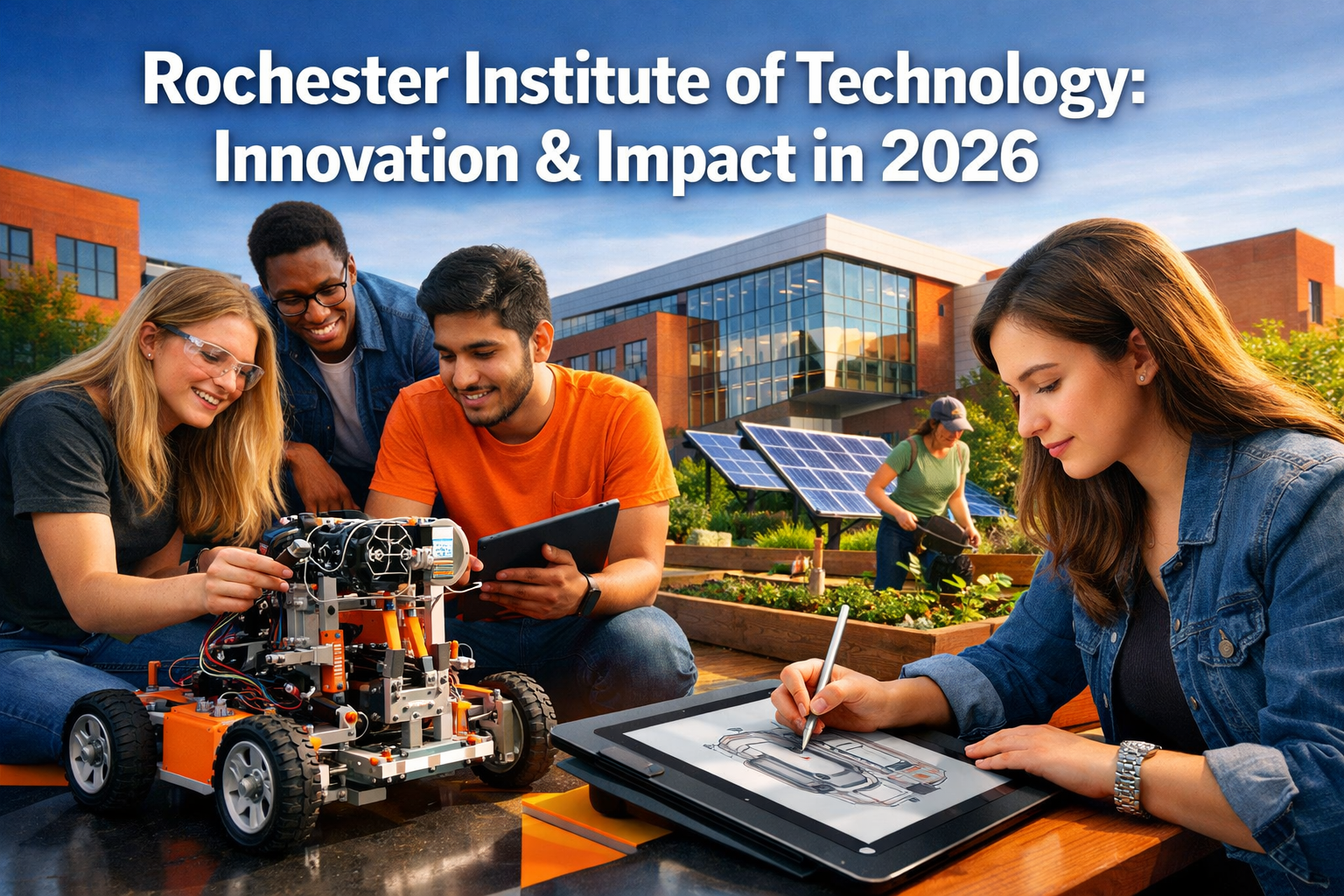
In the dynamic landscape of higher education, few institutions carve out a niche as distinctive and impactful as the Rochester Institute of Technology (RIT). For prospective students, parents, and industry professionals alike, understanding what is Rochester Institute of Technology known for is crucial to appreciating its unique contributions to technology, art, and design. Far from being just another technical university, RIT stands as a global leader in experiential learning, interdisciplinary innovation, and inclusive education. As we move through 2026, RIT continues to solidify its reputation for preparing students not just for jobs, but for impactful careers and lives, driven by a powerful blend of academic rigor and real-world application. This comprehensive guide will delve deep into the pillars of RIT’s renown, exploring its academic strengths, research prowess, unique educational model, and vibrant community.
Key Takeaways
- RIT is renowned for its strong programs in engineering, computer science, and technology, consistently ranking among the best for innovation and research.
- It’s a global leader in art, design, and imaging science, uniquely blending creativity with technological expertise.
- The National Technical Institute for the Deaf (NTID), a federal partner, makes RIT a pioneer in inclusive education for deaf and hard-of-hearing students.
- A cornerstone of RIT’s education is its mandatory cooperative education (co-op) program, providing extensive, paid, real-world work experience.
- RIT excels in applied research and innovation, particularly in areas like sustainability, advanced manufacturing, and cybersecurity, fostering a culture of discovery.
Engineering and Computer Science: A Foundation of Innovation
When people ask what is Rochester Institute of Technology known for in the STEM fields, the answer almost invariably begins with its formidable reputation in engineering and computer science. RIT’s Kate Gleason College of Engineering and Golisano College of Computing and Information Sciences are cornerstones of its academic excellence, consistently producing graduates who are highly sought after by leading global companies. The programs are not merely theoretical; they are steeped in practical application, problem-solving, and cutting-edge research.
Robust Engineering Programs ⚙️
- Mechanical Engineering: A flagship program, focusing on design, analysis, and manufacturing, with strong ties to local and national industries.
- Electrical and Computer Engineering: Graduates are at the forefront of developing new technologies in areas like embedded systems, power electronics, and telecommunications.
- Biomedical Engineering: An interdisciplinary field combining engineering principles with medical and biological sciences to improve healthcare.
- Software Engineering: Focused on the systematic development of software systems, preparing students for complex software challenges.
- Microsystems Engineering: A unique program exploring the design and fabrication of micro- and nano-scale devices, crucial for future technologies.
RIT’s engineering curriculum emphasizes hands-on projects, state-of-the-art labs, and a collaborative environment. Students often work on real-world challenges, from designing autonomous vehicles to developing sustainable energy solutions, ensuring they gain practical experience long before graduation.
Pioneering Computer Science and Computing Disciplines 💻
The Golisano College of Computing and Information Sciences is a powerhouse, home to one of the largest and oldest computing colleges in the nation. It addresses the diverse needs of the digital age with programs like:
- Computer Science: Covering fundamental theories and advanced algorithms, preparing students for roles in software development, AI, and data science.
- Cybersecurity: A critical and rapidly growing field, RIT’s program trains experts to protect digital assets and infrastructure from evolving threats. It’s recognized as a National Center of Academic Excellence in Cyber Defense Education by the NSA and DHS [1].
- Game Design and Development: Consistently ranked among the top programs globally, combining technical skills with artistic creativity to produce immersive interactive experiences.
- Data Science: Equipping students with the skills to analyze, interpret, and leverage vast amounts of data for decision-making across industries.
- Human-Centered Computing: Focusing on the interaction between humans and computers, with an emphasis on user experience (UX) and interface design.
“RIT doesn’t just teach you how to code or design; it teaches you how to think critically, innovate fearlessly, and apply your knowledge to solve the world’s most pressing problems. The co-op experience alone is invaluable for launching your career.” – RIT Alumni, Class of 2023
Art, Design, and Imaging Science: The Intersection of Creativity and Technology
Beyond its STEM prowess, a significant part of what is Rochester Institute of Technology known for lies in its exceptional programs bridging the worlds of art, design, and science. The College of Art and Design and the College of Science, particularly the Chester F. Carlson Center for Imaging Science, exemplify RIT’s unique interdisciplinary strength.
World-Class Art and Design 🎨
RIT’s College of Art and Design is one of the most comprehensive art and design colleges in the U.S., offering a diverse range of programs that consistently earn national and international acclaim:
- Industrial Design: Focused on product development, from concept to market, with a strong emphasis on user experience and aesthetics.
- Graphic Design: Covering branding, typography, interactive design, and visual communication, preparing students for roles in advertising, web design, and publishing.
- Photography and Photographic Arts: With a rich history stemming from George Eastman’s legacy, RIT’s photography programs are world-renowned, covering commercial, fine art, and photojournalism [2].
- Illustration: Training artists in various mediums and styles for careers in publishing, animation, and concept art.
- Animation: From traditional 2D to advanced 3D modeling and visual effects, preparing students for roles in film, gaming, and interactive media.
The presence of the Vignelli Center for Design Studies on campus further solidifies RIT’s commitment to design excellence, housing the archives of legendary designers Massimo and Lella Vignelli and serving as a hub for design scholarship and exhibitions.
Pioneering Imaging Science
🖼
️
Related Posts:
- How Technology Benefits Students Enhancing Learning…
- Navigating the Digital Classroom: How Much Money Do…

- How to Become a Technology Teacher Career Path and…

- Is Technology Reducing Critical Thinking The Digital Dilemma

- Is Virtual Reality a Disruptive Technology Impact on…

- How Technology Helps in Healthcare Innovations Saving Lives

The Chester F. Carlson Center for Imaging Science at RIT is a global leader, unique in its comprehensive approach to the science and technology of imaging. This is another key aspect of what is Rochester Institute of Technology known for globally:
- Remote Sensing: Developing technologies to collect and interpret data from satellites and aircraft for applications in environmental monitoring, urban planning, and defense.
- Medical Imaging: Innovating techniques and tools for better diagnosis and treatment, such as MRI, CT, and ultrasound.
- Digital Photography and Image Processing: Advancing the science behind digital cameras, image enhancement, and computational photography.
- Color Science: A highly specialized field focusing on the perception, measurement, and reproduction of color in various applications, from displays to printing.
RIT’s imaging science program combines physics, mathematics, computer science, and engineering to tackle complex imaging challenges, making its graduates highly sought after in diverse industries, from tech giants to medical device companies.
National Technical Institute for the Deaf (NTID): A Model of Inclusive Education
One of the most distinctive and impactful aspects of what is Rochester Institute of Technology known for is its role as the host institution for the National Technical Institute for the Deaf (NTID). Established in 1965 by an act of Congress, NTID is the world’s first and largest technological college for deaf and hard-of-hearing students [3]. This unique integration fosters an unparalleled learning environment.
An Inclusive Campus Community 🤝
- Bilingual-Bicultural Environment: RIT provides a rich communication environment where American Sign Language (ASL) and spoken English are equally valued. Services like sign language interpreters, captioning, and note-takers are readily available across campus.
- Mainstreamed and Specialized Programs: NTID students can pursue associate’s degrees within NTID or mainstream into RIT’s other colleges for bachelor’s and graduate degrees, supported by comprehensive academic and communication access services.
- Global Impact: NTID serves as a national and international resource center on the education and employment of deaf and hard-of-hearing people, conducting research and outreach that benefits the global deaf community.
- Diversity and Empathy: The presence of NTID enriches the entire RIT community, fostering a culture of diversity, inclusion, and empathy among all students, faculty, and staff. It provides unique opportunities for hearing students to learn ASL and engage with deaf culture.
This commitment to accessibility and inclusion is a defining characteristic of RIT, making it a truly unique and forward-thinking institution. It demonstrates a holistic approach to education that values every individual’s potential.
Cooperative Education and Career Readiness: The RIT Advantage
Perhaps the most practical and career-defining answer to what is Rochester Institute of Technology known for is its pioneering and mandatory cooperative education (co-op) program. This signature approach ensures that students graduate with not just a degree, but with significant, paid, real-world work experience, making them exceptionally career-ready.
The Power of Co-op 💼
- Mandatory for Most Programs: Unlike optional internships at many universities, RIT’s co-op is an integral and often mandatory part of the curriculum for most bachelor’s degree programs. Students typically complete multiple blocks of full-time work experience.
- Paid, Full-Time Work: Co-ops are paid positions, providing students with financial support and exposure to professional work environments. They are typically full-time, structured roles within companies.
- Extensive Industry Network: RIT has a vast network of corporate partners, ranging from Fortune 500 companies to innovative startups, ensuring diverse opportunities across various fields globally.
- Career Exploration and Skill Development: Co-ops allow students to explore different career paths, apply classroom knowledge, develop professional skills, and build a robust resume before graduation.
- High Post-Graduation Employment Rates: The co-op model directly contributes to RIT’s high employment rates and competitive starting salaries for its graduates, often leading to full-time job offers from co-op employers.
| Aspect of Co-op | RIT’s Approach (2026) | Typical University Internship |
|---|---|---|
| Requirement | Mandatory for most bachelor’s programs | Optional or elective |
| Duration | Multiple full-time blocks (e.g., 2-5 blocks, each 3-6 months) | Usually one summer or semester, often part-time |
| Compensation | Predominantly paid positions | Often unpaid or minimally paid |
| Experience Level | Significant, career-level professional experience | Introductory or project-based experience |
| Industry Exposure | Extensive, diverse industry connections | Varies by program/university resources |
| Impact on Employment | Directly leads to high post-graduation employment & job offers | Enhances resume, but less direct pipeline to job offers |
This hands-on, learn-by-doing philosophy permeates RIT’s entire educational structure, ensuring that graduates are not just knowledgeable, but also experienced, adaptable, and ready to make an immediate impact in their chosen fields.
Research and Innovation: Addressing Global Challenges
Another answer to what is Rochester Institute of Technology known for is its vibrant research ecosystem, focused on applied research that solves real-world problems. RIT is classified as a “High Research Activity” university by the Carnegie Classification of Institutions of Higher Education, with significant research expenditures and a growing number of doctoral programs.
Key Research Areas 🔬
- Sustainability: RIT’s Golisano Institute for Sustainability is a leader in developing sustainable technologies, policies, and business practices, focusing on areas like renewable energy, green manufacturing, and climate change solutions.
- Imaging Science and Remote Sensing: Building on its imaging expertise, RIT conducts advanced research in satellite imaging, medical imaging, and computational photography.
- Cybersecurity and AI: Researchers are at the forefront of developing secure systems, artificial intelligence algorithms, and machine learning applications to address complex data challenges.
- Advanced Manufacturing and Materials Science: Innovations in 3D printing, advanced robotics, and new materials are driving progress in various industries.
- Bioinformatics and Health Sciences: Applying computational methods to biological data, aiding in medical discoveries and personalized healthcare.
- Photonics and Optics: Leveraging Rochester’s rich history in optics, RIT contributes significantly to research in optical communication, quantum optics, and laser applications.
RIT encourages a robust undergraduate and graduate research culture, allowing students to work alongside faculty on projects that often lead to publications, patents, and entrepreneurial ventures. This emphasis on discovery and innovation positions RIT as a crucial contributor to societal advancement in 2026 and beyond.
Global Impact and Community Engagement: Beyond the Campus
RIT’s influence extends far beyond its campus in Rochester, New York. Its global campuses and strong community ties also shape what is Rochester Institute of Technology known for.
Global Footprint 🌍
RIT operates global campuses in several countries, providing students with international educational experiences and extending its reach:
- RIT Croatia: Campuses in Dubrovnik and Zagreb offer programs in hospitality, business, and information technology.
- RIT Dubai: Located in the United Arab Emirates, offering programs in engineering, computing, and business.
- RIT Kosovo (A.U.K): Provides programs in applied arts and sciences, management, and media.
- RIT China (Weihai Campus): A collaborative program focusing on engineering and technology.
These global campuses foster a diverse student body and faculty, preparing graduates for a globally interconnected world.
Rochester Community Connection
🏙
️
RIT plays a vital role in the economic and cultural life of the Rochester region. It is a major employer and a source of innovation that fuels local startups and industries. Its students and faculty engage in numerous community service projects, partnerships with local businesses, and cultural events that enrich the broader Rochester area.
Why Choose RIT in 2026?
For those considering higher education in 2026, understanding what is Rochester Institute of Technology known for paints a clear picture of an institution dedicated to practical learning, innovation, and career success. RIT offers:
- A challenging academic environment with a focus on experiential learning.
- Unparalleled career preparation through its mandatory co-op program.
- A unique blend of technology, art, and design disciplines.
- A truly inclusive and diverse campus community.
- Opportunities to engage in impactful research and global experiences.
RIT graduates are not just equipped with theoretical knowledge; they possess the hands-on skills, critical thinking abilities, and professional experience demanded by today’s rapidly evolving global economy.
Frequently Asked Questions About RIT
How to Explore Your Fit at RIT
If you’re considering applying to Rochester Institute of Technology, here are practical steps to understand if it’s the right place for you:
Research RIT’s Signature Programs
Begin by exploring RIT’s most renowned fields, such as engineering, computer science, imaging science, graphic design, and hospitality. Understand what makes these programs stand out, including specific faculty expertise, research opportunities, and alumni success stories. Pay close attention to unique offerings like the National Technical Institute for the Deaf (NTID) and its associated programs.
Evaluate Co-op Requirements and Opportunities
Investigate the cooperative education (co-op) requirements for your programs of interest. RIT is famous for its mandatory co-op program, which provides invaluable work experience. Understand how many co-op blocks are required, the types of companies RIT partners with, and how this hands-on experience aligns with your career aspirations.
Consider Interdisciplinary Pathways
Many of RIT’s strengths lie in its interdisciplinary approach, especially at the intersection of technology, art, and design. Explore combined majors, minors, and research opportunities that allow you to blend different fields, such as UX design with psychology, or robotics with industrial design. This can provide a unique edge in your future career.
Connect with Current Students and Faculty
Reach out to current RIT students, alumni, and faculty in your desired fields. Participate in virtual information sessions, campus tours, or college fairs to gain firsthand insights into the academic culture, faculty mentorship, and student life. Their perspectives can offer practical advice and help you gauge the program’s suitability.
Review Career Outcomes and Alumni Network
Examine the career placement rates, average starting salaries, and types of companies that hire RIT graduates from your programs of interest. A strong alumni network and robust career services indicate excellent post-graduation prospects. Websites like LinkedIn can also provide insights into alumni career paths.
Key Rochester Institute of Technology Terminology
Conclusion
In summary, what is Rochester Institute of Technology known for encompasses a powerful combination of top-tier STEM and creative programs, a groundbreaking cooperative education model, an unwavering commitment to inclusive education through NTID, and a robust culture of applied research and innovation. As of 2026, RIT stands as a testament to the power of hands-on learning, interdisciplinary collaboration, and a student-centered approach to preparing future leaders and innovators. For those seeking an education that not only imparts knowledge but also builds professional experience and fosters personal growth, RIT offers a truly distinctive and rewarding path.
The Institute’s dedication to solving real-world challenges, embracing diversity, and fostering entrepreneurial spirit ensures that its graduates are well-prepared to thrive in a complex and rapidly changing world. Considering RIT means choosing an institution that consistently ranks high in career placement and offers a transformative educational experience.
Next Steps:
- Explore RIT’s Official Website: Dive deeper into specific programs, faculty profiles, and admission requirements.
- Schedule a Campus Visit or Virtual Tour: Experience the vibrant campus culture and see the state-of-the-art facilities firsthand.
- Connect with Admissions Counselors: Get personalized advice and answers to your specific questions about RIT.
- Attend an Information Session: Learn more about RIT’s unique offerings and the application process.
References
- [1] RIT. (n.d.). RIT Designated National Center of Academic Excellence in Cyber Defense Education.
- [2] RIT. (n.d.). School of Photographic Arts and Sciences.
- [3] RIT. (n.d.). National Technical Institute for the Deaf (NTID). Retrieved from https://www.rit.edu/ntid