

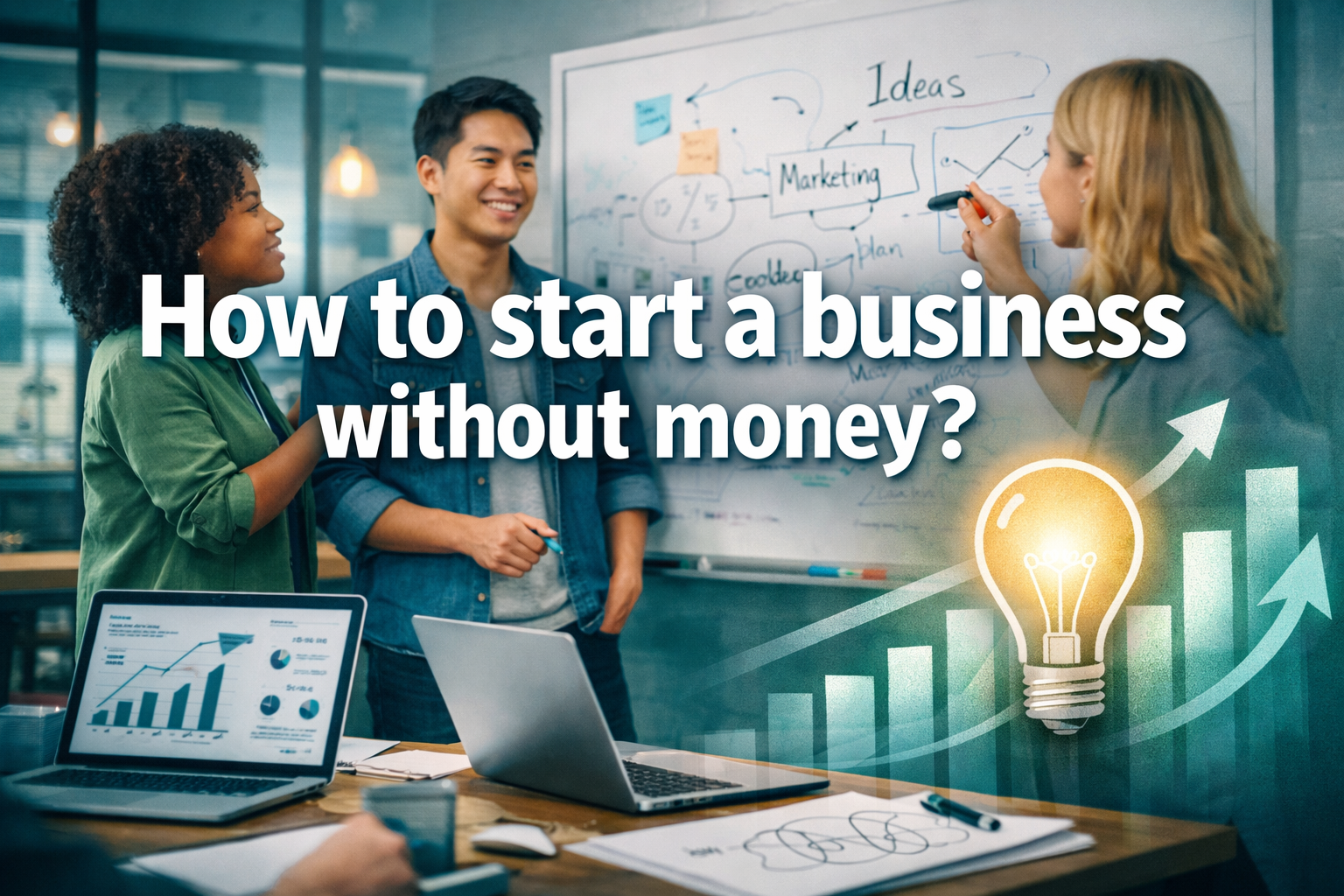
The dream of entrepreneurship often feels out of reach for those without significant capital. Many aspiring business owners believe a large sum of money is the prerequisite for success, stifling their ambitions before they even begin. However, in 2026, the landscape of business creation has democratized, making it more feasible than ever to launch a venture with little to no upfront investment. This comprehensive guide will show you precisely how to start a business without money, transforming your ideas into profitable realities through resourcefulness, strategic planning, and leveraging accessible tools.
Key Takeaways
- Leverage Existing Skills: Your most valuable asset is often your expertise. Identify what you’re good at and how it can solve problems for others.
- Embrace Bootstrapping: Start small, reinvest profits, and grow organically. This approach minimizes risk and builds a sustainable foundation.
- Utilize Free Digital Tools: The internet offers a wealth of free platforms for marketing, communication, and even product creation.
- Focus on Service-Based Models: These often require only your time and skill, eliminating the need for inventory or expensive equipment.
- Build a Strong Network: Connections can lead to clients, partnerships, and invaluable advice without costing a dime.
Deconstructing the “No Money” Myth: Understanding Bootstrapping in 2026
For decades, the conventional wisdom dictated that starting a business required substantial seed capital for office space, inventory, marketing, and staff. This perception often deterred individuals from pursuing their entrepreneurial aspirations. However, 2026 presents a different reality. The rise of the gig economy, digital platforms, and remote work has fundamentally shifted what’s needed to launch a successful venture.
Bootstrapping (defined term) refers to the process of starting and growing a business using only existing personal resources, such as savings, personal credit, or the initial revenues generated by the new company. It means avoiding external funding from investors or banks in the early stages. This approach forces entrepreneurs to be incredibly lean, creative, and customer-focused from day one.
Why Bootstrapping is Your Ally When Asking “How to Start a Business Without Money”
- Minimal Risk: You’re not accumulating debt or giving away equity from the outset.
- Full Control: You retain complete ownership and decision-making power.
- Resourcefulness: It compels you to find innovative, cost-effective solutions.
- Validation: Early sales prove market demand before significant investment.
- Financial Discipline: You learn to manage every dollar efficiently.
Identifying Your Golden Skill: Your First Zero-Cost Asset
Before you can figure out how to start a business without money, you must first recognize that you already possess a valuable asset: your skills, knowledge, and experience. These are your foundational capital. Forget about fancy business plans for a moment; think about what you are genuinely good at, what problems you enjoy solving, and what knowledge you have accumulated.
Brainstorming Your Expertise and Passions 🤔
Take some time for self-reflection. Consider the following categories:
- Professional Skills: What tasks do you perform well in your current or past jobs? (e.g., writing, data analysis, graphic design, social media management, project coordination).
- Hobbies & Interests: What do you do in your free time that others might pay for? (e.g., cooking, gardening, photography, fitness, pet care, musical instruction).
- Life Experiences: What challenges have you overcome or unique insights have you gained that could help others? (e.g., parenting advice, organizational skills, budgeting tips, specific travel expertise).
- Unrecognized Talents: What do friends and family always ask you for help with? (e.g., tech support, proofreading, event planning, fashion advice).
Once you have a list, cross-reference it with what the market needs. What problems are people willing to pay to solve? This intersection of your skills and market demand is where your zero-cost business opportunity lies.
Choosing Your Low-Cost Business Model: Practical Paths to Launching Without Capital
The next step in understanding how to start a business without money is selecting a business model that inherently requires minimal capital. These models often rely on your time, skills, and existing digital infrastructure rather than physical inventory or expensive overheads.
Popular Zero-Investment Business Models in 2026 📈
| Business Type | Description | Skills Utilized | Initial Cost |
|---|---|---|---|
| Freelance Services (defined term) | Offer professional services (writing, design, VA, consulting) to multiple clients on a project basis. | Writing, graphic design, marketing, admin, web development, data entry. | Virtually none (computer, internet). |
| Local Service Businesses | Provide services directly to consumers in your community (e.g., cleaning, pet sitting, tutoring, handyman). | Manual labor, organization, teaching, specific repair skills, animal care. | Minimal (basic supplies, transport). |
| Digital Products | Create and sell downloadable goods like eBooks, templates, online courses, or printables. | Writing, graphic design, instructional design, coding. | Time, free software (Canva, Google Docs). |
| Affiliate Marketing | Promote other companies’ products and earn a commission on sales made through your unique link. | Content creation, SEO, social media marketing, persuasive writing. | Time (blogging, social media). |
| Dropshipping | Sell products online without holding any inventory yourself. The supplier ships directly to the customer. | E-commerce, marketing, customer service. | Website fees (can start free), advertising (can be organic). |
The beauty of these models is their scalability and low barrier to entry. They allow you to test your ideas with a Minimal Viable Product (MVP) (defined term), gathering feedback and iterating without a significant financial commitment.
Your First Clients: Marketing Strategies for Zero Budget
Even if you know how to start a business without money, finding customers is crucial. Marketing doesn’t have to be expensive. In 2026, the digital landscape offers myriad free and low-cost ways to reach your target audience and build a brand.
Related Posts:
Building a Buzz Without Breaking the Bank 🚀
- Social Media Marketing (Organic): Identify platforms where your target audience spends time (LinkedIn for B2B, Instagram/TikTok for B2C, Facebook Groups for communities). Share valuable content, engage with others, and demonstrate your expertise. Consistently posting high-quality, relevant content builds an audience over time.
- Content Marketing: Start a free blog (e.g., using WordPress.com or Medium), a YouTube channel, or a podcast. Create content that solves common problems for your target audience. This establishes you as an authority and attracts inbound leads.
- Networking (Online & Offline): Attend free local business events, join industry-specific online forums, or participate in relevant Facebook/LinkedIn groups. Offer genuine help and build relationships. Referrals are gold and cost nothing.
- Google My Business: If you’re a local service provider, create a free Google My Business profile. This helps local customers find you via Google Search and Maps. Encourage reviews!
- Word-of-Mouth: Deliver exceptional service from day one. Happy customers are your best marketers. Actively ask for testimonials and referrals.
- Email Marketing (Free Tiers): Platforms like Mailchimp or MailerLite offer free plans for up to a certain number of subscribers. Collect email addresses and nurture leads with valuable content and promotions.
- Public Relations (DIY): Look for opportunities to share your story with local media or industry publications. Craft a compelling press release or offer to write an article related to your niche.
Building Credibility & Infrastructure on a Shoestring Budget
Even without money, a business needs to look professional and operate efficiently. This is another area where knowing how to start a business without money really pays off by leveraging free and freemium tools.
Essential Tools & Resources (Mostly Free!)
🛠
️
- Communication:
- Email: Use a professional-sounding email address (e.g., [email protected] initially, then upgrade to a custom domain email via Google Workspace’s free trial if needed).
- Video Conferencing: Zoom (free tier), Google Meet, or Microsoft Teams.
- Online Presence:
- Website/Portfolio: Free website builders like WordPress.com, Google Sites, Carrd, or a strong LinkedIn profile can serve as your initial online hub.
- Social Media Profiles: Tailored profiles on relevant platforms (Facebook, Instagram, LinkedIn, etc.).
- Design & Branding:
- Logo Design: Canva (free tier) or Hatchful for basic logos.
- Graphics: Canva, Unsplash (free stock photos).
- Productivity & Management:
- Project Management: Trello (free tier), Asana (free tier), Notion (free tier).
- Document Creation: Google Workspace (Docs, Sheets, Slides) – free with a Google account.
- Scheduling: Calendly (free tier) for booking appointments.
- Payments:
- Invoicing/Payments: PayPal Business, Stripe, or Square allow you to accept payments with transaction fees but no monthly costs.
Legal & Administrative Steps for Your Zero-Cost Business
Understanding the basic legal and administrative requirements is critical, even when you’re figuring out how to start a business without money. Many essential steps can be taken with minimal or no cost, ensuring you operate legitimately.
Navigating the Legal Landscape Frugally ⚖️
- Choose a Business Structure:
- Sole Proprietorship: This is the simplest and cheapest to start. You are personally liable, but it requires no formal setup beyond getting any necessary local licenses. Your business income is reported on your personal tax return.
- Partnership: If you start with another individual, this is a common choice. A simple partnership agreement can be drafted, but legal advice is recommended.
- Limited Liability Company (LLC): While providing personal liability protection, setting up an LLC usually involves state filing fees (which vary significantly by state, from $50 to $500+). Consider this once you have generated some revenue.
- Business Name: Choose a clear, memorable name. Check for availability using free online tools (e.g., state business registry, domain name registrars, social media handles). Registering a “Doing Business As” (DBA) name might have a small fee depending on your location, but it’s not always required immediately for a sole proprietorship.
- Obtain Necessary Licenses & Permits: Research local, state, and federal requirements for your specific industry. Many home-based service businesses require very few, if any, specific licenses beyond standard business registrations, which can sometimes be free or low-cost at a municipal level. Use your local Small Business Administration (SBA) or SCORE resources for guidance.
- Separate Finances: As soon as you make your first dollar, open a separate bank account for your business. This is crucial for tracking income and expenses, simplifying taxes, and maintaining professionalism. Many banks offer free business checking accounts with no minimum balance requirements.
- Understand Tax Obligations: Familiarize yourself with the tax implications for your chosen business structure. As a sole proprietor, you’ll likely pay self-employment taxes (Social Security and Medicare) and income tax. Keep meticulous records of all income and expenses from day one. Use free accounting software like Wave Accounting or even a simple spreadsheet.
Always consult with a local Small Business Development Center (SBDC) or SCORE mentor for free, personalized advice on legal and administrative requirements in your specific area. They are invaluable resources for entrepreneurs with limited budgets.
Growth & Sustainability: From Zero to Profitable in 2026
Starting with no money is an impressive feat, but sustainable growth is the ultimate goal. Once you’ve established yourself and begun generating revenue, the challenge shifts to smart reinvestment and scaling.
Smart Reinvestment and Scaling Strategies 🌱
- Reinvest Profit Wisely: Don’t spend all your early earnings. Reinvest a portion back into your business for tools that save time, improve quality, or expand your reach. This could mean a premium software subscription, a professional website domain, or targeted low-cost advertising.
- Continuously Learn & Adapt: The market is always changing. Stay updated on industry trends, new technologies, and customer needs. Utilize free online courses (Coursera, edX, YouTube tutorials) to develop new skills.
- Focus on Customer Satisfaction: Happy customers become repeat customers and valuable referrers. Provide excellent service, listen to feedback, and build strong relationships.
- Automate & Outsource Gradually: As your business grows, identify repetitive tasks that can be automated (e.g., email responses) or outsourced (e.g., a virtual assistant for administrative tasks) when you have the budget. Start with micro-tasks on platforms like Upwork or Fiverr if your budget is minimal.
- Expand Your Offerings: Once your core service or product is successful, consider complementary offerings or new markets. This could be creating a premium version of your service or developing a related digital product.
- Build a Community: Foster a community around your brand or niche. This can be through a private Facebook group, an email list, or regular webinars. A strong community builds loyalty and provides a valuable feedback loop.
Remember, the journey of building a business with no money is often a marathon, not a sprint. Celebrate small wins, learn from setbacks, and remain persistent.
FAQ: How to Start a Business Without Money
Conclusion: Your Journey to Frugal Entrepreneurship Begins Now
The notion of needing substantial capital to launch a successful business is, in many cases, outdated in 2026. This comprehensive guide has demonstrated that it is not only possible but increasingly common to learn how to start a business without money. By leveraging your existing skills, embracing a bootstrapping mindset, and strategically utilizing the wealth of free and low-cost digital resources available, you can transform your entrepreneurial dreams into tangible realities.
The path will demand dedication, resourcefulness, and patience. You will likely wear many hats and face unique challenges that well-funded startups might bypass. However, these very challenges will forge a resilient entrepreneur, intimately familiar with every facet of their operation, capable of building a truly sustainable and meaningful venture.
Actionable Next Steps for Aspiring Frugal Entrepreneurs:
- Self-Assessment: Dedicate an hour today to list your top 5 skills, passions, and problem-solving abilities.
- Market Research (Free): Spend another hour researching online (Google Trends, Reddit, Quora, social media groups) to see if there’s a demand for services or products related to your identified skills.
- Choose Your Model: Select one low-cost business model from this article that aligns best with your skills and market demand.
- Outline Your MVP: Define the absolute simplest version of your service or product that you can offer to your first client within the next week.
- Build a Basic Presence: Create a professional profile on LinkedIn or a relevant social media platform, or set up a free Google My Business listing.
- Network Actively: Reach out to 3-5 people in your existing network who might benefit from your skills or know someone who could.
Your entrepreneurial journey does not require a large bank account, but it does require courage, consistency, and a commitment to creating value. Start today, and watch your no-money business take root and flourish.
References
Investopedia. (2026). Bootstrapping.